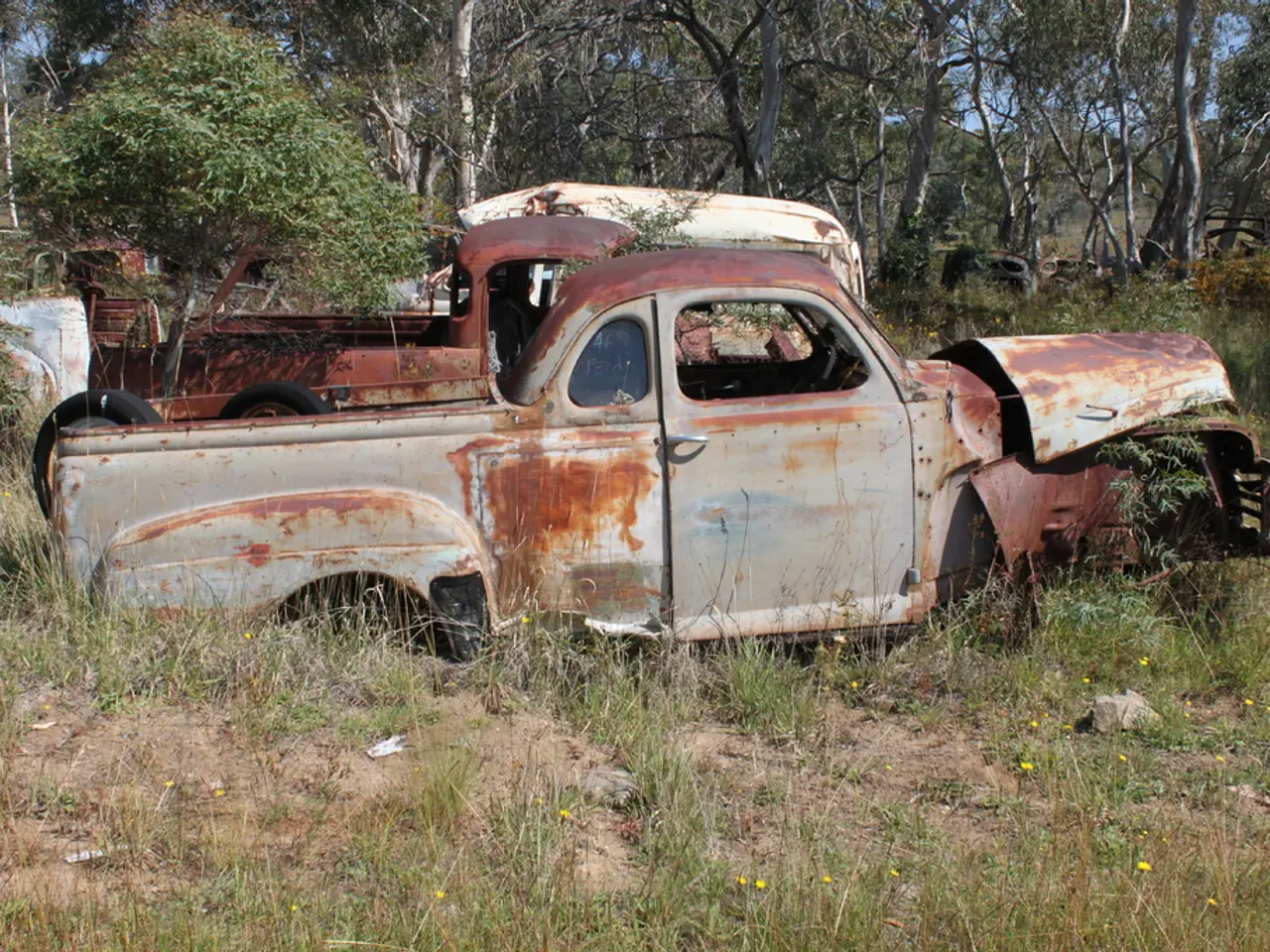
Modify cars with intense destruction effects using a blend of Maya and Nuke software tools.
In the realm of visual effects, crafting convincing battle damage on 3D assets can pose a significant challenge. However, the Whiskytree VFX team, working on a prominent TV show, has devised an ingenious workflow that preserves the original look and ensures flexibility and efficiency in the creative process.
The team confronted the task of creating battle damage on 3D assets without compromising the underlying shaders or geometry. To address this, they opted to use their lighting and scene assembly tool, Gaffer, to facilitate the procedural aspects.
The workflow commences by generating damage outlines. These are fundamental cookie-cutter shapes with irregular edges, extruded to form solid 3D structures. The damage is then positioned by placing these large damage Booleans where the most substantial impact is desired, focusing on areas like the main hull and corners of the wings and engines.
The Booleans generate high-resolution cutouts and proximity maps. The proximity mask aids in isolating and displacing the edges of the Boolean cuts, providing a more natural and organic appearance to the damage. These maps are dynamically reimported, allowing adjustments to curvature masks and the paint-to-bare metal ratio mask.
Following the rendering passes, the masks and beauty renders are combined with the original plate using a tool like Nuke. Smaller bullet holes are scattered using a preferred scattering tool, concentrating more around major damage areas and adding sporadically across the rest of the hull.
Bullet holes are small, pebble-like models employed to simulate the effect of bullet penetration. These models are versatile in size, capable of being scaled up or down without revealing their scale.
The setup enables the creation of multiple masks for compositing, including a softened proximity mask, a bare metal versus paint mask, a curvature mask, and masks for the holes created by the Booleans and bullet holes. After the damage locations are approved, destructive modelling can be added for final details using sculpting tools like ZBrush or Blender.
The Whiskytree VFX team also evaluated two solutions: manually sculpting damage or developing a scalable and adaptable workflow. They chose the latter, finding it more efficient and adaptable to various kinds of damage and models, including buildings, structures, and other vehicles.
By utilizing the assets' original shaders and textures without needing to create duplicates or alter the originals, this workflow offers a substantial time-saving advantage. Modifying heavy production-level assets can be time-consuming and complex, but this approach allows adjustments without delving into their complexities. However, it might not be as effective with assets created in-house, where there's more control over development.
In addition to Gaffer and Houdini, the team also harnessed Blender's Geometry Nodes in their workflow, demonstrating their commitment to leveraging a diverse range of tools to deliver high-quality visual effects.
This innovative approach by the Whiskytree VFX team not only enhances the visual appeal of the prominent TV show but also sets a new standard for efficient and flexible battle damage creation in the world of visual effects.