
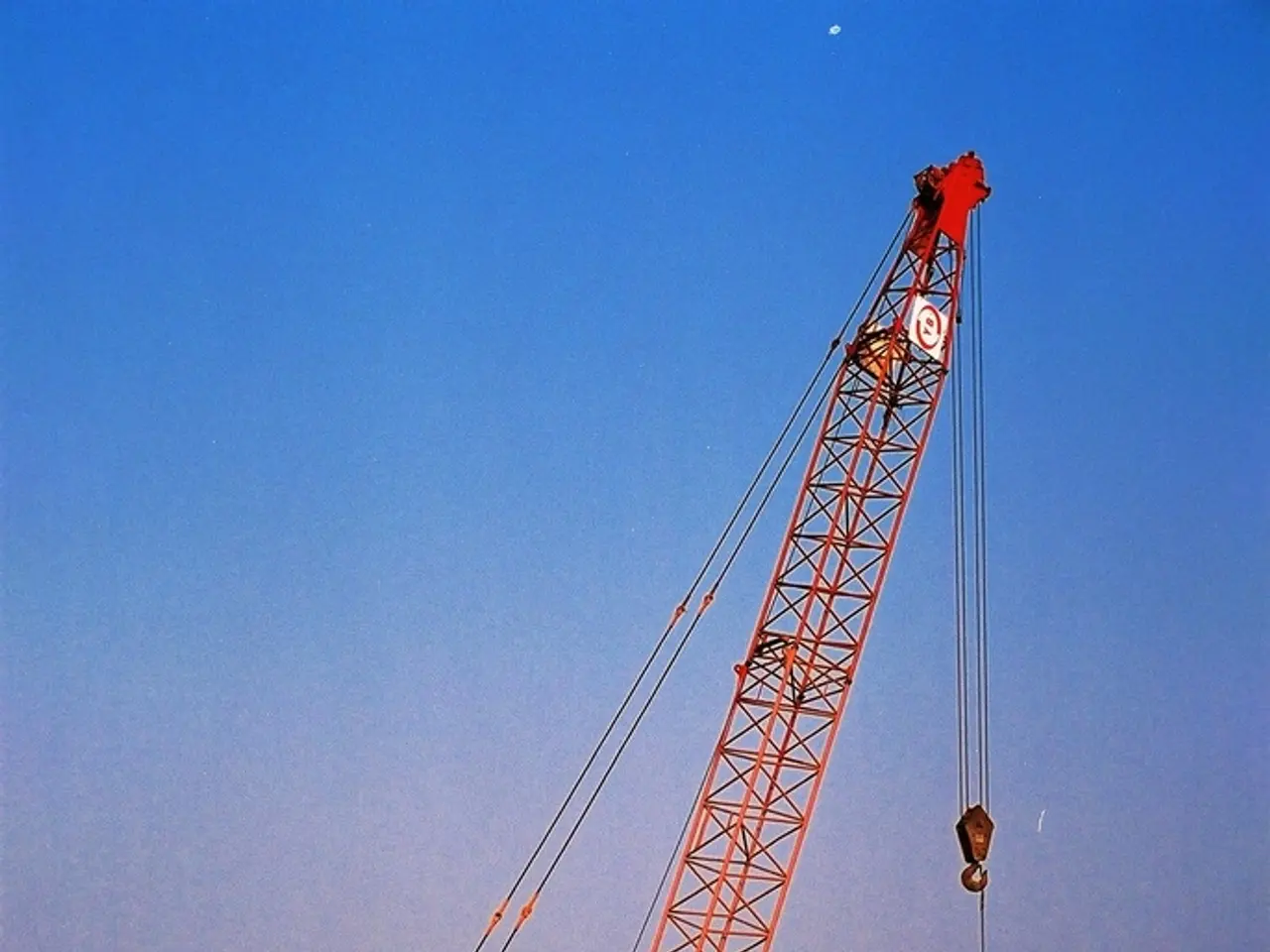
World's Mightiest Crane, SGC-250, now operational at Hinkley Point C power station.
The Sarens SGC-250 crane, affectionately known as "Big Carl," is a colossal figure in the ongoing construction of the Hinkley Point C nuclear power plant. This land-based crane, the world's largest of its kind, is playing a pivotal role in the assembly of massive nuclear components.
With a capacity to lift up to 5,000 tons with just one hook and a radius of 40 meters, the SGC-250 is a force to be reckoned with. Its twelve motors, divided into six units, allow for independent control and separate maintenance, ensuring precision and efficiency in its operations.
The SGC-250 has proven its mettle in the Hinkley Point C construction site, recently lifting a 245-ton dome onto the second nuclear reactor building, demonstrating its capability for critical heavy lifts in nuclear construction.
What sets the SGC-250 apart is its ring-based design, which allows for unparalleled lifting capacities and precision in large-scale infrastructure projects. This design, coupled with its massive power, makes it invaluable for nuclear power plant assembly and high-demand construction environments.
However, the SGC-250's presence at Hinkley Point C is not without debate. Some argue that investments would be better directed towards renewable energy sources such as wind energy, solar power plants, and modern storage technologies.
Despite the controversies, the Hinkley Point C project, a major political and technical endeavour in the UK, is expected to provide nuclear power to complement wind, solar, and storage solutions. The project, one of the largest construction sites in Europe, is home to over 26,000 people, including 14,000 skilled professionals, 1,500 apprentices, and many workers from economically disadvantaged regions of the UK.
The project, initially slated to go online by 2026, has faced delays and is now expected to start operations no earlier than 2031, five years behind the original schedule. Despite these challenges, the SGC-250 continues to play a crucial role in the efficient and safe movement of heavy, pre-assembled components.
Interestingly, the rise of Small Modular Reactors (SMRs) is gaining traction in politics and industry. SMRs, prefabricated in factories and then delivered to their destination, offer potential cost savings and shorter planning phases. This shift towards SMRs could potentially redefine the role of cranes like the SGC-250 in future nuclear power projects.
References: [1] BBC News, Hinkley Point C: World's largest crane arrives on site [2] World Nuclear News, SGC-250 crane arrives at Hinkley Point C [3] Nuclear Engineering International, Hinkley Point C: SGC-250 crane lifts 245t reactor dome [4] Sarens, SGC-250 [5] World Construction Network, Hinkley Point C: SGC-250 Crane is World's Largest Land-Based Crane
- The company, Sarens, has showcased the utility of their gadget, the SGC-250 crane, in the technology sector, particularly in large-scale infrastructure projects like the nuclear power plant at Hinkley Point C.
- Progress in the nuclear industry may see a shift towards Small Modular Reactors (SMRs), which could impact the role of cranes like the SGC-250 in future construction projects, potentially redefining their significance in technology and renewable energy solutions.